


Valuations recovering – M&A window for digital marketing opening
Digital Services M&A Report September 2026

Q1 2026 – M&A trends, valuation multiples and transactions in the Computing & Connectivity sector
We are pleased to present the Q1 2026 ARTHOS Computing & Connectivity Sector Report. It provides commentary and analysis on current market trends, valuation developments, and M&A transactions, with a focus on recent developments affecting the entire European electronic supply industry.
Rising demand for defense is clearly strengthening the valuation of suppliers. Rather than restating the obvious, I would like to highlight three related observations:
1.) As revenues and earnings increase through defense exposure, not only did enterprise values rise, but valuation multiples, particularly EV/NTM EBITDA, increased as well, creating additional upside for sellers.
2.) The consolidation of the EEMS industry has shifted towards near-shoring, resilience, and supply security
3.) The entire European electronics supply chain — including providers of sensors, control systems, computing platforms, industrial IoT solutions, and embedded software — should prepare for further consolidation, driven by stricter cybersecurity regulations.

Managing Partner ARTHOS
Expert in Sensors, Automation, Semiconductor & Photonics
As shown on the following chart of this report, EV/NTM EBITDA multiples of different industries shifted significantly in 2025 compared to previous years: Defense and EEMS (Engineering and Electronic Manufacturing Services) increased, Machine Vision declined, and Edge Computing & Connectivity remained volatile. In my view, this re-rating is not temporary. It is likely to persist and benefit not only suppliers to the defense industry but also companies across the broader electronic supply chain ecosystem.
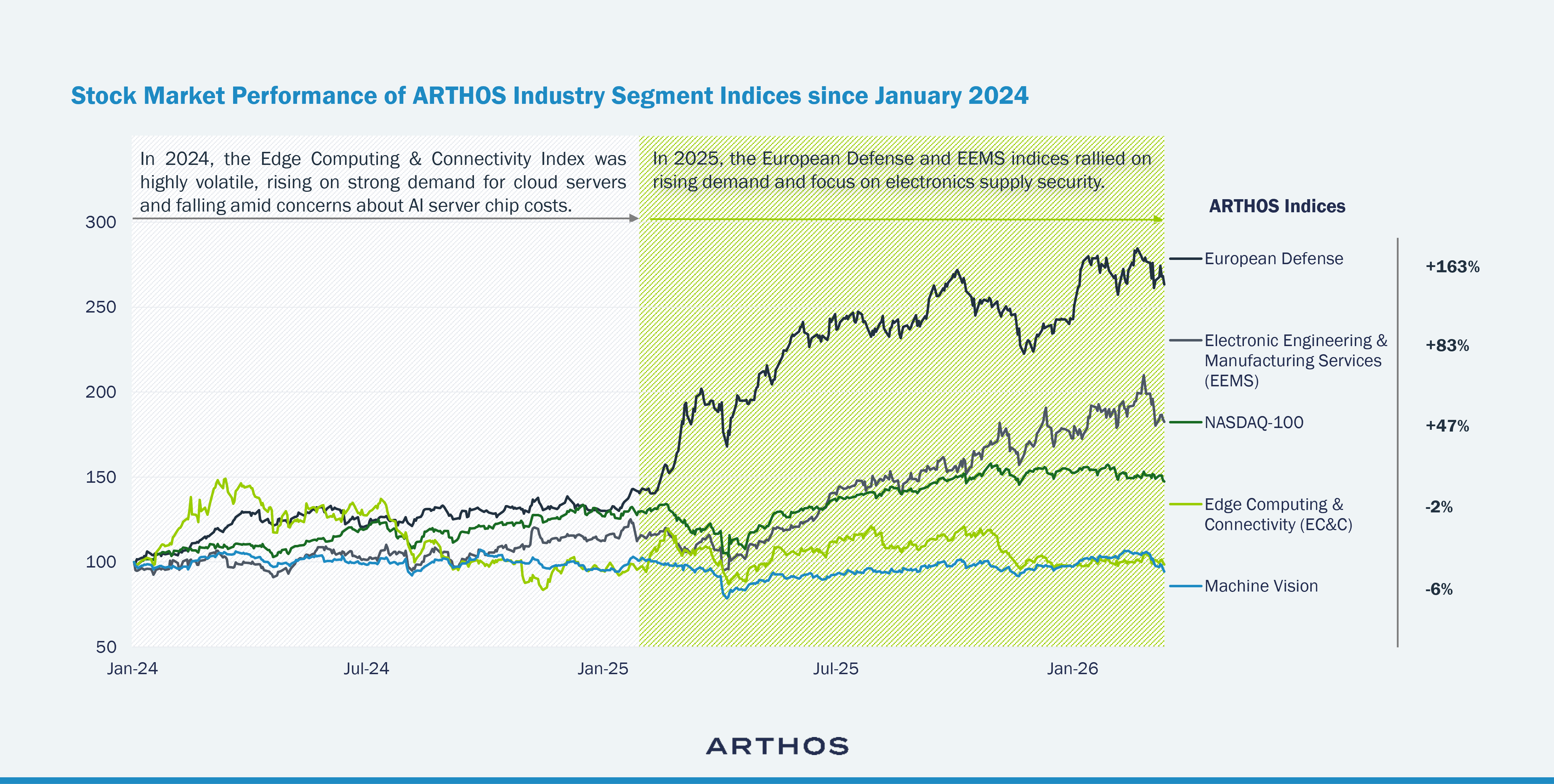
Capital IQ (as of March 13, 2026)
The consolidation of the EEMS industry, which began in 2024 amid weak demand and declining revenues, has now taken on a different character. Demand is modestly increasing, and emerging digital trends are driving growth expectations. However, the focus has shifted towards near-shoring, resilience, and supply security — driven by defense and other regulated industries serving critical infrastructure. The transactions highlighted in this report illustrate this trend clearly and demonstrate that sellers can achieve attractive purchase prices in the electronic supply industry.
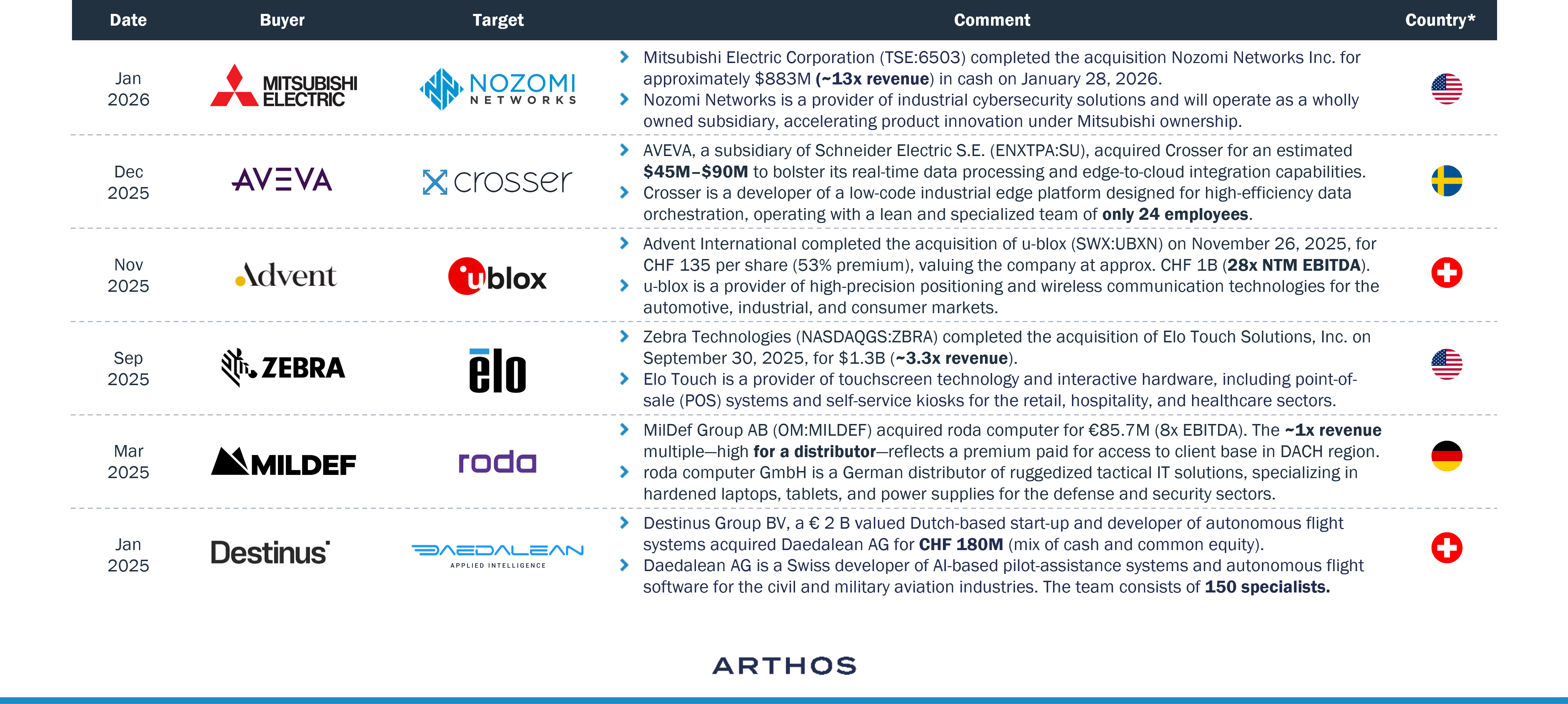
Capital IQ (as of March 13, 2026)
The NIS2UmsuCG, effective from December 6, 2025, represents a far more consequential regime than previous IT security legislation. The law directly targets large companies and critical infrastructure operators, who will cascade these requirements to their IoT and technology suppliers, effectively extending compliance obligations across the entire electronics supply chain. Furthermore, the CSA 2 is on its way, also strengthening and expanding the framework. Medium-sized companies will face significant challenges, and many smaller firms are unlikely to absorb the regulatory burden, thereby accelerating consolidation across the European electronic supply industry.
For further analysis of M&A trends, valuation multiples, and transactions in the industry, view the following PDF.
We regularly publish analyses of M&A trends, valuation multiples, and transactions
Digital Services M&A Report September 2026

Vision M&A Report Q2 2026

Semiconductor M&A Report Q2 2026

Software M&A Report Q2 2026
Software M&A Report March 2026
Test & Measurement M&A Report Q3 2025
Software M&A Report Q3 2025
Digital Services M&A Report August 2025
Software M&A Report Q2 2025
Robotics M&A Report Q2 2025
Laser M&A Report Q2 2025
Vision M&A Report Q2 2025